
Carbon Monoxide Safety: What Every Ontario Gas Furnace Owner Needs to Know for 2026
A Quiet Rule Change That Affects Almost Every Furnace Owner in Ontario
Starting January 1, 2026, Ontario's Fire Code requires a working carbon monoxide (CO) alarm on every storey of a home with a fuel-burning appliance — not just outside the sleeping areas, which was the old rule. If you've got a gas furnace, gas water heater, gas fireplace, gas stove, or an attached garage, this applies to your house, whether it's a bungalow or a three-storey with a finished basement. Homes that are fully electric, with no fuel-burning appliances and no attached garage, are exempt. Apartment and condo buildings heated by fuel-burning equipment also need alarms added in their public corridors.
I've been getting calls about this from customers who saw a headline and weren't sure what actually applies to them, so here's the plain version.
What's Actually Changing
The old requirement only asked for a CO alarm outside or near the sleeping areas of a home with a fuel-burning appliance or attached garage. The 2026 update extends that to every storey of the home — basement, main floor, second floor, and any floor above that, whether or not anyone sleeps there. The logic makes sense: a slow CO leak from a furnace in the basement doesn't always reach an alarm two floors up fast enough, and a lot of time gets spent on floors where nobody's sleeping.
Where Alarms Should Go
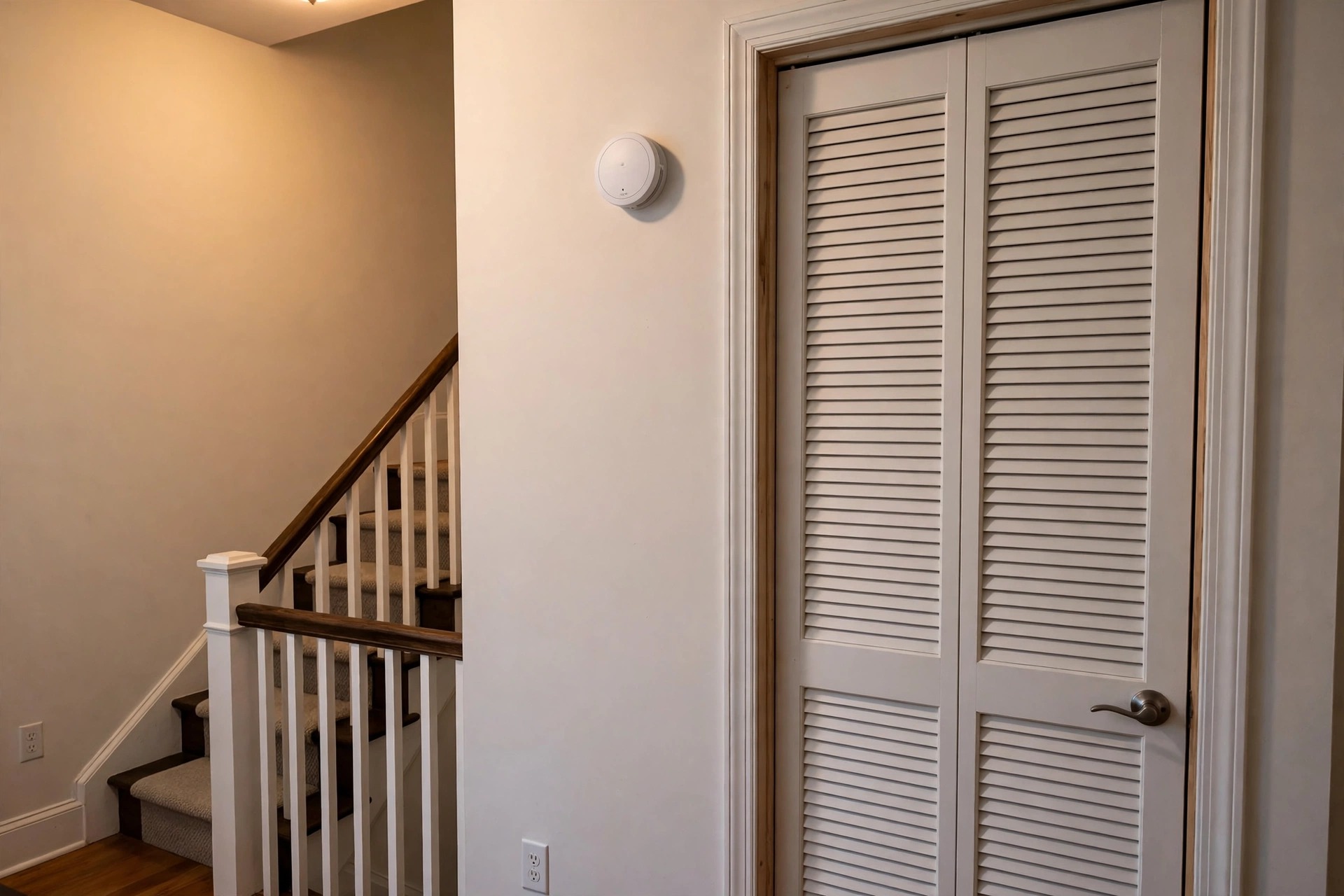
General guidance for placement is to mount alarms on the ceiling or high on a wall, away from corners, windows, and air vents where exhaust gets diluted before it reaches the sensor, and within about 10 metres of sleeping areas where practical. On other floors, one alarm covering the main living space is generally what's expected. If you're not sure your current setup meets the every-storey requirement, a licensed technician can walk through your home with you in a few minutes and tell you exactly where you're covered and where you're not.
A few practical notes while you're at it: test every alarm monthly using its test button, replace alarms every seven to ten years since the sensors do expire, and look for a Canadian certification mark (CSA or ULC) when buying a new one.
Why This Isn't Just a Paperwork Update
Carbon monoxide is colourless, odourless, and tasteless, which is exactly why it's dangerous — you can't tell it's building up in your home without a working alarm. Low-level exposure often looks like the flu or a bad headache: dizziness, nausea, confusion, fatigue, and chest pain that tend to ease up once you're away from the house and get worse again once you're back inside. That pattern — symptoms that come and go with time spent at home — is one of the clearest signs something's wrong with a fuel-burning appliance, not a seasonal bug. At higher concentrations, CO exposure can cause loss of consciousness and can be fatal, and it can happen without any smell or visible warning at all.
A properly maintained, correctly vented gas furnace shouldn't produce dangerous CO levels in your living space. Problems show up when a heat exchanger cracks, a vent gets blocked by snow, ice, or debris, or a flue isn't drafting the way it was designed to. That's a big part of why annual furnace maintenance matters beyond just efficiency — a technician checking combustion and venting during a tune-up is also checking for exactly this.
If Your Alarm Goes Off
Treat it as the real thing every time, even if nobody feels sick. Get everyone out of the house immediately, call 911 or your local fire department from outside or from a neighbour's, and don't go back in until first responders say it's safe or a licensed technician has found and fixed the source. Don't try to air out the house and go back to normal on your own — CO levels can fluctuate, and the appliance causing it is still a problem until someone qualified finds it.
We've been installing, inspecting, and repairing gas furnaces across the GTA, Hamilton, London, Kitchener-Waterloo, and Ottawa since 2012, and every technician we send out is licensed and TSSA-certified, so checking your venting and combustion safety as part of a furnace visit is routine for us, not an upsell.
Get Your Home Checked Before Winter Sets In
If you're not sure whether your home meets the new every-storey requirement, or your furnace hasn't had a combustion safety check in a while, now's a good time before the cold weather really settles in. Call 1-888-705-7368 for a free quote, and we'll help you figure out exactly what you need — whether that's adding alarms, a furnace tune-up, or a full furnace inspection. We serve homeowners across Toronto, Hamilton, Kitchener-Waterloo, and Ottawa.
FAQs
Q: Do I need a CO alarm if I don't have a gas furnace?
A: If your home has any fuel-burning appliance — a gas water heater, gas fireplace, gas stove, or similar — or an attached garage, you need alarms on every storey under the 2026 rule. Fully electric homes with no attached garage are exempt.
Q: Can I use my smoke detector instead of a separate CO alarm?
A: No, unless it's specifically a combination smoke/CO alarm certified for both. A standard smoke detector doesn't sense carbon monoxide at all.
Q: How do I know if my furnace is the source of a CO problem?
A: You generally can't tell on your own — CO has no smell, colour, or taste. A licensed technician can test combustion and venting during a furnace inspection to check for cracks, blockages, or draft problems that could let CO into your home.