
Furnace Won't Start This Fall? 7 Things to Check Before You Call for Repair
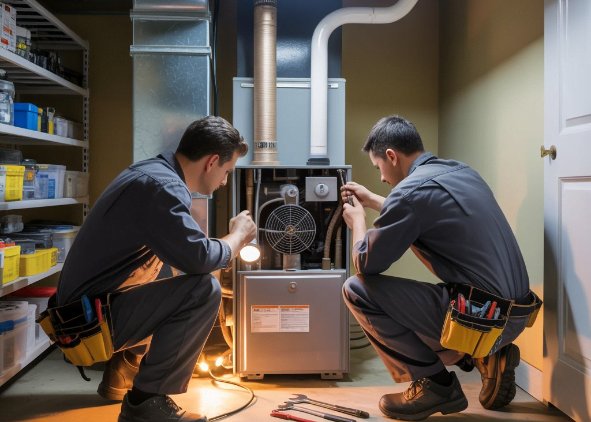
Every fall, my phone starts ringing with the same call: "I turned my furnace on and nothing happened." After sitting idle all summer, furnaces can be a little stubborn about waking up — and most of the time, it's not a big deal. Before you book a service call, here are the seven things I check first, in the order I check them.
Why Furnaces Act Up When the Weather Turns
A furnace that's been off for five or six months has had time for dust to settle, pilot lights to go out, and thermostat batteries to quietly die. None of that means the unit is broken — it usually just means it needs a nudge.
7 Things to Check Before You Call for Repair
1. Is the thermostat actually calling for heat?
Sounds obvious, but check that it's set to "Heat," not "Cool" or "Off," and that the set temperature is a few degrees above the room temperature. If it's a battery-powered thermostat, swap the batteries — this fixes more "dead" furnaces than anything else on this list.
2. Check the breaker and the furnace switch
Furnaces run on electricity even if they burn gas. Look for a light switch near the unit (it looks like a regular wall switch) and make sure it's on, then check your electrical panel for a tripped breaker.
3. Is the switch on the furnace itself in position?
Most furnaces have a small on/off switch on the unit or the access panel. It's easy to bump when storing things nearby over the summer.
4. Look at the air filter
A filter that's clogged from disuse can cause the furnace to shut itself off as a safety measure. If you can't remember the last time you changed it, that's your answer — swap it before doing anything else.
5. Check the exhaust and intake pipes outside
Modern high-efficiency furnaces vent through PVC pipes on the outside of your home. If leaves, a wasp nest, or early frost are blocking either pipe, the furnace will refuse to run rather than risk venting improperly.
6. Look for a blinking light on the control board
Open the front panel and look for a small window with a flashing LED. That blink pattern is a diagnostic code — check your furnace's manual or model number online, or just tell us the pattern when you call and we can often tell you what it means over the phone.
7. Check the condensate drain (high-efficiency furnaces)
If your furnace is a newer high-efficiency model, it has a condensate drain line that can clog or freeze, especially after sitting unused. A clogged drain will trip a safety switch and stop the furnace from firing.
When It's Time to Call a Pro
If you've been through this list and the furnace still won't start — or it starts and then shuts off again — stop troubleshooting and call for furnace repair. Repeated shutdowns usually point to an ignition, gas valve, or safety sensor issue that needs proper diagnostic equipment.
And if your furnace is older and this isn't the first startup problem you've had, it may be more cost-effective to replace it than keep patching it. We're currently offering 0% interest for 12 months on select furnaces — worth a look at our furnace options and financing details before winter hits.
We quote furnace repairs and replacements over the phone or by video across the GTA — including Toronto and the surrounding cities — with no in-home visit required.
Get It Sorted Before the Cold Sets In
Don't wait for the first real cold snap to find out your furnace has a problem. If these checks didn't get it running, give us a call at 1-888-705-7368 and we'll help you figure out whether it's a quick fix or time for something new.
Frequently Asked Questions
Q: Why won't my furnace turn on after being off all summer?
A: Most often it's a dead thermostat battery, a tripped breaker, or a switch that got bumped over the summer. Work through the basics before assuming it's a major repair.
Q: My furnace's light is blinking — what does that mean?
A: It's a diagnostic code from the control board. The pattern (number of blinks, pauses) tells you the specific fault — check your model's manual, or call us with the pattern and we can often narrow it down over the phone.
Q: Is it worth repairing an older furnace or should I replace it?
A: If it's under 12–15 years old and this is a one-off issue, repair usually makes sense. If it's older and this keeps happening, replacement is often the better long-term value — especially with the current 0% financing offer.