
The Truth About Heat Pumps in Ontario Winters
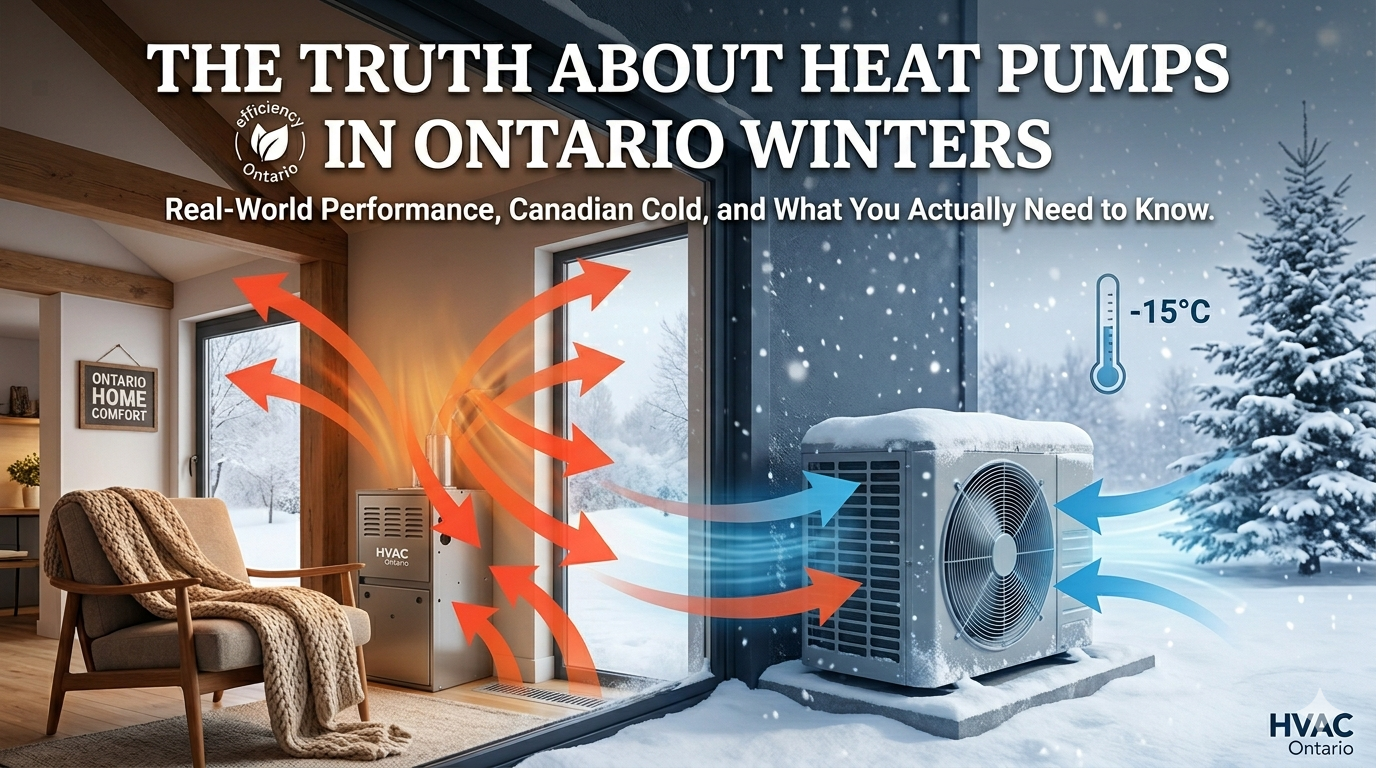
The Truth About Heat Pumps in Ontario Winters
There's a question I get asked constantly by Ontario homeowners, and it usually sounds something like this: "Do heat pumps actually work in our winters, or is that just marketing?"
It's a fair question. Ontario winters are serious — we're talking -20°C stretches in January, sustained cold snaps, and the kind of weather that demands reliable, consistent heat. The skepticism about heat pumps comes from an older generation of the technology that genuinely did struggle in cold climates. But that's not the world we're in anymore.
Here's the honest picture, from someone who has installed and maintained these systems across Ontario for years.
How Heat Pumps Actually Work
A heat pump doesn't generate heat the way a furnace does — it moves heat. Even when outdoor air feels bitterly cold to you, it contains thermal energy. A heat pump extracts that energy and transfers it indoors. In summer, the process reverses: heat is pulled from inside and released outdoors, functioning as an air conditioner.
The efficiency of a heat pump is measured by its Coefficient of Performance (COP) — how many units of heat energy it delivers per unit of electrical energy consumed. At 0°C, a modern cold-climate heat pump achieves a COP of 3 or higher. That means for every dollar of electricity, you're getting three dollars' worth of heat. A standard electric baseboard heater has a COP of 1.
The Cold-Climate Difference Is Real
Standard heat pumps can struggle below -10°C. Cold-climate heat pumps — the type HVAC Ontario installs — are engineered specifically for Canadian winters and rated to operate at full capacity down to -25°C or lower. These aren't the same units being sold in Georgia or Florida. They use variable-speed compressors, enhanced refrigerant, and larger coil surfaces to extract heat from air that most systems can't handle.
Lennox, Midea, Kepler, Mitsubishi, Bosch, and other manufacturers have models purpose-built for climates exactly like ours. When sized and installed correctly, they deliver consistent warmth at outdoor temperatures that used to be considered out of range for heat pump technology.
Dual-Fuel Systems: The Practical Middle Ground
For homeowners who want heat pump efficiency with furnace-level reliability, a dual-fuel or hybrid system pairs a cold-climate heat pump with an existing gas furnace. The heat pump handles heating duties during milder weather — spring, fall, and moderate winter days — while the furnace takes over only when temperatures drop to the point where gas heat becomes more cost-effective.
The result: you dramatically reduce your gas consumption for most of the heating season, lower your carbon footprint, and still have the backup comfort of gas heat on the coldest days. Many Ontario homeowners in this setup see gas bills drop by 40–60% while maintaining the same indoor comfort level.
Rebates Make the Numbers Work
Cold-climate heat pumps qualify for significant rebates through Ontario's Home Renovation Savings Program — and how much you receive depends on your current heating setup:
Primary heat source is a gas furnace? If your home is already heated by a gas furnace and you're upgrading your existing air conditioner to a heat pump — or installing a heat pump for the first time — you can qualify for up to $2,000 back in government rebates. Your gas furnace stays exactly where it is. You're simply getting a smarter, more efficient cooling and shoulder-season heating solution on top of it.
Currently relying on baseboard heating or other electric heat? If your home runs on baseboard heaters or another form of electric resistance heating, you may qualify for up to $7,500 in government rebates when upgrading to a cold-climate heat pump. This is one of the largest residential energy rebates available in Ontario right now.
HVAC Ontario manages the entire rebate process — from the initial home energy assessment through application submission — so you receive the full available amount without the administrative burden. Combined with 0% financing options, the upfront cost barrier that used to make heat pumps a hard sell has largely disappeared for Ontario homeowners.
What to Expect From a Heat Pump in an Ontario Winter
Honest answer: if it's installed properly, sized for your home, and you've chosen a cold-climate model, you will be comfortable. You may notice the system runs longer cycles than a furnace — that's by design, it's more efficient that way. You may also need a secondary heat source for the absolute coldest nights, depending on your home's insulation and layout.
A proper heat pump assessment from HVAC Ontario includes a load calculation for your specific home. There's no guessing — the sizing is done by math, not approximation.