
What Size Furnace Does Your Home Actually Need?
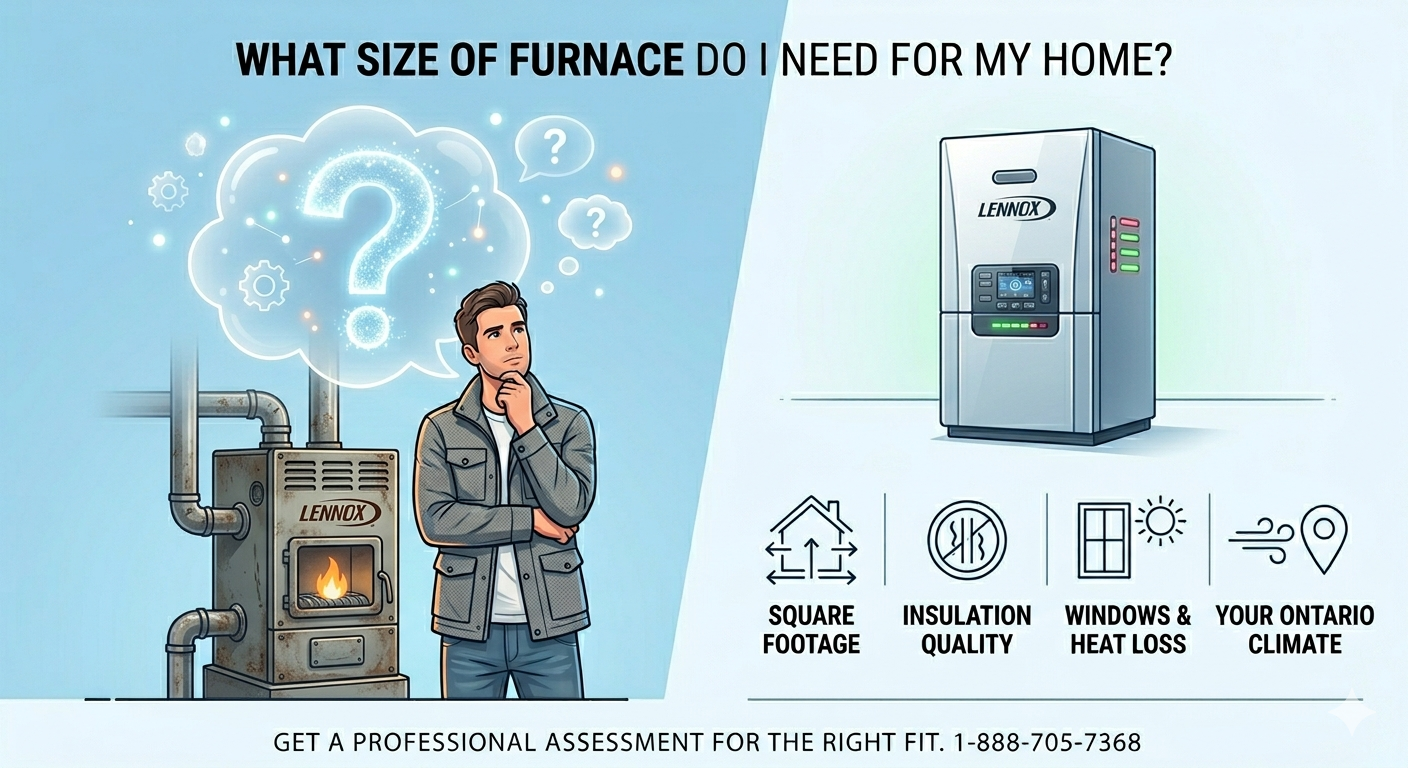
What Size Furnace Does Your Home Actually Need?
Choosing the right size furnace is one of the most important decisions you will make for your home's comfort and energy efficiency. Get it wrong in either direction, and you will pay for it — in comfort, in fuel bills, and in premature equipment failures.
This article breaks down why sizing matters, what factors determine the right fit, and why speaking directly with a furnace expert is always the smartest first step.
Why Furnace Sizing Matters More Than Most Homeowners Realize
Many homeowners assume that a bigger furnace means a warmer, safer home. In reality, an oversized furnace causes as many problems as one that is too small
The Problem With an Oversized Furnace
When a furnace is too powerful for the home it is heating, it reaches the set temperature too quickly and shuts off before completing a full heating cycle. This is called short-cycling, and it creates a cascade of problems:
-
Uneven temperatures: Rooms farthest from the furnace never warm up properly because the blower does not run long enough to distribute heat evenly.
-
Increased wear and tear: Frequent on/off cycling puts enormous stress on components, leading to earlier breakdowns and a shorter equipment lifespan.
-
Higher energy bills: Furnaces consume the most energy at startup. An oversized unit that starts and stops constantly uses far more fuel than a properly sized one running steadily.
-
Humidity problems: Shorter run times mean less time for the furnace to filter and condition the air, leading to dry, uncomfortable indoor environments in winter.
The Problem With an Undersized Furnace
A furnace that is too small for your home faces its own serious drawbacks:
-
Cold zones: The unit simply cannot keep up during extreme cold snaps, leaving certain rooms or areas chronically cold.
-
Continuous running: The furnace runs non-stop trying to meet demand, driving up your gas bill and burning out components well ahead of schedule.
-
Comfort complaints: Homeowners often blame the thermostat or call for service when the real problem is that the equipment was never properly sized to begin with.
What Actually Determines the Right Furnace Size?
Furnace sizing is measured in BTUs (British Thermal Units). The goal is to match the furnace's output to the actual heating demand of your specific home. Several factors determine what that demand is:
Home Square Footage
Square footage is the most obvious factor, but it is far from the only one. A rough starting point for Ontario homes:
-
Under 1,200 sq ft: 40,000–60,000 BTU range
-
1,200–2,500 sq ft: 60,000–80,000 BTU range
-
2,500–3,200 sq ft: 80,000–100,000 BTU range
-
Over 3,200 sq ft: 100,000+ BTU, often with zoning
hese are starting points only — not recommendations. Every home is different.
Ceiling Height
Standard 8-foot ceilings are the baseline. Cathedral ceilings, open-concept layouts, and finished basements all increase the volume of air that needs to be heated, which affects the sizing calculation.
Insulation and Air Sealing
A well-insulated and air-sealed home holds heat far more efficiently than an older home with drafty windows and limited attic insulation. Two homes of identical square footage can require very different furnace capacities based solely on their insulation quality.
Window Area and Glazing Type
Windows are the primary source of heat loss in most Canadian homes. Single-pane windows lose heat dramatically faster than modern triple-pane units. The number, size, and type of windows in your home all affect how hard your furnace has to work.
Ontario Climate Zone
Ontario spans multiple climate zones, and local heating degree days (a measure of how cold your region gets and for how long) influence sizing. A home in Sudbury faces meaningfully different heating demands than the same home in Windsor.
Ductwork and Home Layout
The condition, design, and layout of your existing ductwork plays a significant role. Older duct systems with leaks, poor design, or undersized runs will affect how efficiently the furnace can distribute heat — and can influence what type and size of equipment is most appropriate.
Single-Stage, Two-Stage, or Variable-Speed — Does the Type of Furnace Matter?
Yes — and this is where many homeowners stop short. Sizing is not just about BTU output. The type of furnace you choose has a major impact on comfort, efficiency, and operating cost.
Single-Stage Furnaces
Single-stage furnaces operate at 100% capacity every time they run. They are reliable, straightforward, and typically the most affordable option. They are well-suited to smaller, simpler homes or budget-conscious buyers
Two-Stage Furnaces
A two-stage furnace operates at a lower capacity (typically around 65–70%) for most of the heating season, ramping up to full power only on the coldest days. The result is longer, gentler heating cycles that distribute heat more evenly, reduce temperature swings, and improve efficiency.
Variable-Speed / Modulating Furnaces
Modulating furnaces are the top tier of residential heating technology. They can adjust their output in small increments — sometimes as finely as 1% at a time — to maintain a nearly constant, comfortable temperature throughout your home. They run quieter, produce less temperature variation, and achieve the highest efficiency ratings. They are best suited to larger homes, homes with comfort issues, or homeowners who want to maximize long-term energy savings.
Matching the right type to your home is just as important as matching the right BTU output. This is why a quick conversation with a furnace expert is so valuable — the recommendation is not a formula. It is a professional judgment based on the full picture of your home.
How HVAC Ontario Helps You Get the Right Fit
HVAC Ontario's furnace experts are manufacturer-trained to assess the right equipment — the right size and the right type — for your specific home. Rather than sending a salesperson to your door, we handle this over the phone. You describe your home: the square footage, the layout, how it heats now, where the problem zones are. Our experts take it from there.
There are no in-home sales visits, no pressure, no upsells. Just a straight answer frm someone who knows furnaces inside and out.
Call 1-888-705-7368 and get a real equipment recommendation in minutes. You can lso explore your options at https://www.hvacontario.ca/buy-furnace
What About Rebates
Ontario homeowners replacing their furnace may be eligible for significant rebates
-
Up to $7,500 for customers upgrading to electric heating (heat pump systems)Up to $2,000 for natural gas / Enbridge customers upgrading their furnace
HVAC Ontario handles all the rebate paperwork on your behalf. Ask about eligibility when you call.
The Bottom Line on Furnace Sizing
Getting the size right matters — for comfort, efficiency, equipment longevity, and your bottom line. The factors involved go well beyond square footage, and the type of furnace you choose is just as important as the BTU rating.
The fastest, most reliable way to get a proper recommendation is to speak with someone who does this every day. Our team is ready to help — and the conversation is faster and easier than you think.
Call 1-888-705-7368. No home visits. No pressure. Just answers.